
One of the most telling yet overlooked aspects of facial ageing is the loss of structural volume that occurs beneath the skin’s surface. While lines and wrinkles are the changes most people notice first, it is often the progressive loss of deep fat, bone, and soft tissue that produces the most significant shift in facial appearance over time.
What Causes Volume Loss and Laxity
Facial volume is supported by a network of deep fat compartments, muscle, and bone. With age, each of these structures changes. Bone resorption alters the underlying architecture of the face. Fat compartments deflate and shift. The ligaments that anchor soft tissue gradually lengthen. The result is a face that appears less defined, less lifted, and less full, particularly in the midface, temples, and under-eye area.
Skin laxity follows a similar pattern. As collagen and elastin decline, the skin loses its capacity to maintain its position against gravity. The jawline softens. The neck becomes less defined. Skin that was once taut begins to descend.
Sun exposure accelerates both processes. The breakdown of collagen and the thinning of the skin from chronic UV exposure reduce the structural support available and exacerbate the appearance of volume loss.
Treatment Options
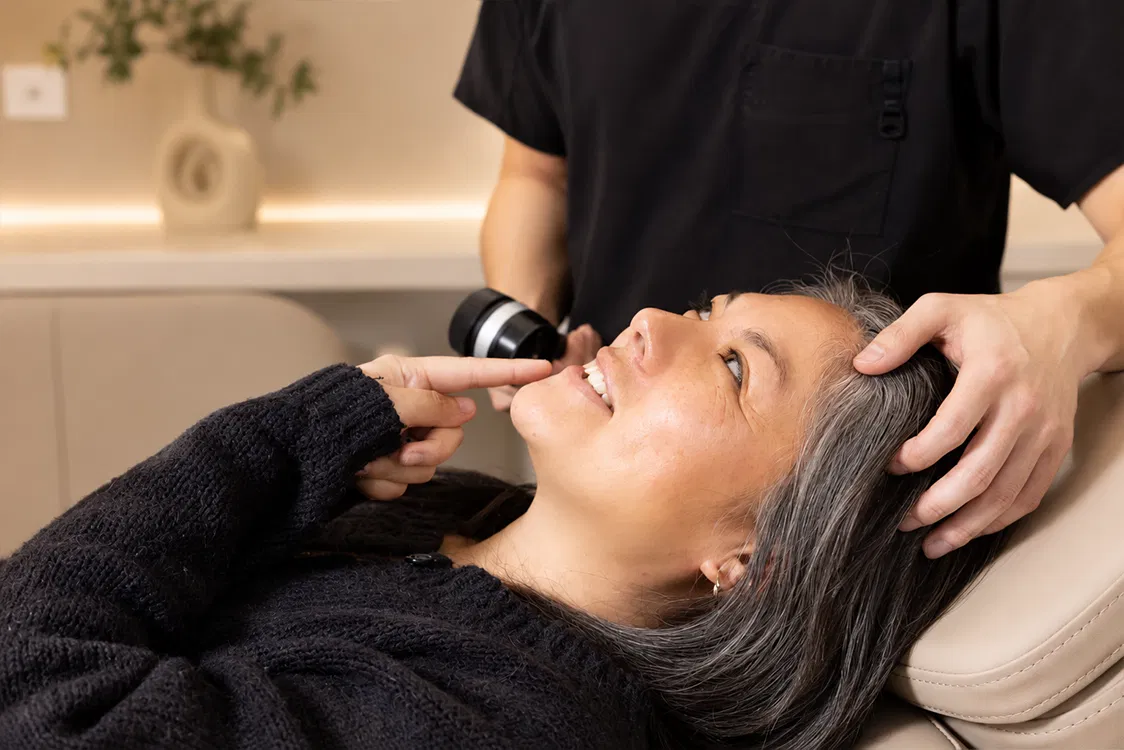
Addressing volume loss and facial laxity requires a considered, structural approach. The practitioner will assess the face as a whole before recommending any treatment, as the most effective outcomes come from treating the underlying architecture rather than isolated surface changes.
Volume restoration treatments
It is natural to experience changes in facial structure and underlying volume. We offer comprehensive medical consultations to assess your individual anatomy and discuss potential options for addressing these structural changes.
Laser-based treatments
Laser-based treatments including Laser Genesis and the Enlighten SR pico laser support collagen production and skin quality improvement as part of an ongoing skin health programme.
Polynucleotide treatments
Polynucleotide treatments such as Rejuran work at a cellular level to improve skin quality, thickness, and resilience. While not a volume replacement, they can complement structural work where appropriate.
Your Consultation
Volume loss and facial laxity are areas where honest assessment is particularly important. The practitioner will take a whole-face approach and discuss the full range of contributing factors before any treatment is recommended. Realistic goals will be agreed, and all options explained clearly. Injectable consultations are conducted with sufficient time for questions and considered decision-making. There is no obligation to proceed.
